Hip osteoarthritis (coxarthrosis)
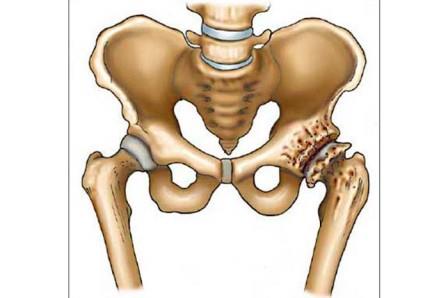
Wear of the cartilage surfaces of the hip joint – known as osteoarthritis – is a very common condition. In its mild form it only causes moderate hip pain under heavy load, but severe wear makes walking very difficult or can even make it impossible.
We do not always know the exact cause, but many factors are known that can lead to hip osteoarthritis, such as excess weight, heavy strain on the musculoskeletal system, developmental disorders of the hip joint, autoimmune joint inflammation, and death and collapse of the femoral head in adulthood.
Some of these factors can be prevented (losing weight, regular exercise). In the early stage, the aim is to reduce joint inflammation, relieve pain and treat the underlying cause. For advanced hip osteoarthritis, surgery – a hip replacement – is considered.
Avascular necrosis of the femoral head
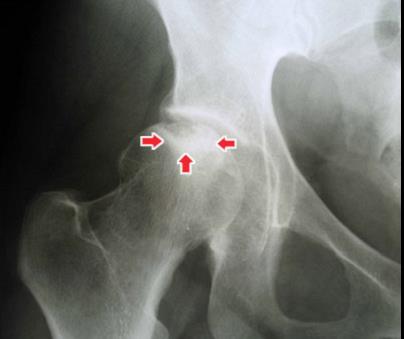
Death of the femoral head (the ball of the hip joint) can occur in both adults and children. In adults it usually affects not the whole femoral head but its upper, most heavily loaded part, so the weakened bone often collapses under body weight – at that point the pain suddenly gets worse.
We do not always know the exact cause, but many factors are known to trigger it: long-term use of steroid medication, alcoholism, and a tendency towards excessive blood clotting. Once the femoral head has collapsed, only removing it and fitting a hip replacement gives a lasting solution.
Infant hip dislocation and hip dysplasia
Hip dislocation and hip dysplasia are developmental disorders of infancy that have a very good chance of cure with early screening and treatment.
Childhood hip inflammation, femoral head necrosis (Perthes disease)
Inflammation of the hip joint most often develops between the ages of 6 and 12, but can also occur earlier. The typical symptom is sudden hip pain, which may radiate into the knee. The child starts to limp and reports severe pain when the hip is fully straightened.
Hip inflammation can usually be diagnosed by a medical examination; ultrasound shows an increase in joint fluid. The direct cause is irritation of the joint lining triggered by the immune system, often after an upper respiratory infection, a cold or another feverish illness, as a result of the immune response to it.
If it is not treated properly, the blood supply to the femoral head can be damaged, which can lead to partial death of the femoral head, known as Perthes disease – this is much more dangerous and usually leads to early cartilage wear.
Because it is not caused by bacteria or viruses, antibiotics play no part in treatment. Taking weight off the hip, bed rest (the child must not walk) and anti-inflammatory medication are essential. The main aim of treatment is to prevent partial death of the femoral head.
Read more: infant hip dislocation, dysplasia and the importance of hip screening
Videos: Hip joint conditions
Links open on YouTube in a new tab. The videos give general information and do not replace a personal examination.