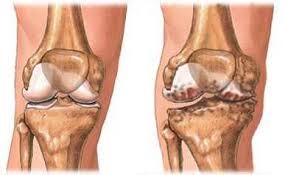
Osteoarthritis (joint wear)
Wear of the joint cartilage is a very common condition and can occur in any joint. It typically develops in the heavily loaded joints of the legs and in the lower back, and less often the elbow and shoulder can be affected.
We do not always know the exact cause, but many triggering factors are known: excess weight, heavy strain on the musculoskeletal system, misalignment of joints or bones, autoimmune joint inflammation and joint injuries. Some of these can be prevented (losing weight, regular but not overly strenuous exercise), and surgical correction of marked misalignment can prevent early joint wear.
In the early stage of osteoarthritis, joint pain on weight-bearing and painful first movements after a long rest are typical. At this stage the aim is to reduce joint inflammation and relieve pain: anti-inflammatory medication or ointment, anti-inflammatory injections, cartilage supplements in tablet form, or joint injections that lubricate the joint.
With more severe wear, the pain increases and becomes constant, and the joint's range of movement decreases – at this point surgical options come to the fore: some joints are suitable for replacing the cartilage surface with a prosthesis, and for a badly deformed, barely moving joint, surgical fusion provides freedom from pain.
Cartilage softening (chondropathy)
If the joint cartilage has to bear more load than usual, it can soften. This condition fairly quickly turns into osteoarthritis, so timely treatment is very important; the warning sign is moderate pain on weight-bearing. Treatment consists of cartilage supplements in tablet form and a course of cartilage-replacing injections, and in some cases surgery may be considered.
Cartilage injury, cartilage detachment
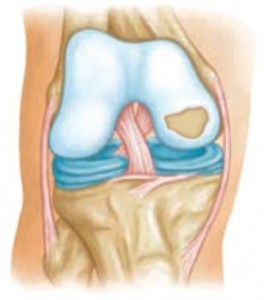
The surface of the joint cartilage is often injured in accidents: a blow can cause marked softening, or part of the cartilage surface can chip off and detach from the bone beneath, which can cause the joint to lock. When cartilage detaches, the joint swells markedly, may bleed internally and becomes very painful.
Arthroscopic removal of the chipped fragment is justified. If the fragment comes from the weight-bearing surface of the joint, cartilage can be transplanted from less important edge areas of the joint to the weight-bearing zone using a technique called mosaicplasty. Cartilage detachment caused by bone necrosis requires a resurfacing prosthesis.
Cartilage damage caused by joint inflammation
Rheumatic inflammatory joint conditions form a typical group of diseases that cause joint pain: at the edges of the cartilage surface, the overgrown joint lining creeps onto the cartilage and destroys it, leading to rapid wear of the cartilage surface.
In the active phase of inflammation, a steroid injection into the joint can stop fluid production and cartilage damage. In more severe cases it may be necessary to open the joint surgically and remove part or all of the joint lining.
Videos: Cartilage conditions
Links open on YouTube in a new tab. The videos give general information and do not replace a personal examination.